
Sun International launched its Responsible Gambling Charter in Sandton on 13 October 2026. The charter covers its casinos and its Sunbet betting site. It promises limits on ads, a block on online accounts for people who say they live on grants, and checks for risky play. It is voluntary. The National Gambling Board's acting CEO said the board backs the work. The R1.5 trillion figure quoted in coverage is money bet, not money earned by operators.
What Sun International promised
The charter applies to Sun International's casinos and its Sunbet online site. The company says it will:
- not run time-dependent broadcast or display gambling ads between 6am and 8am, or between noon and 6pm;
- use 10% of its gaming ad content for responsible gambling messages;
- refuse to open an online account when a customer says a Sassa grant or NSFAS funding is their income;
- use data analytics and, where suitable, AI-supported monitoring from 2027 to flag players who may be at risk, with people reviewing every alert; and
- seek certification from an international responsible gambling body, and hold an annual independent audit.
Group chief executive Ulrik Bengtsson said an external audit of its tools and systems would let customers see that "they are working". The results will go to the board and into the group's yearly report. The company also says it will offer limits, reality checks, cooling-off periods, self-assessment tools and self-exclusion.
What the charter does not do
- It is not law. Its disclaimer calls it a voluntary public statement. It says it creates no legal duty of care and no enforceable duty to any player.
- The ad limit is narrow. It covers only time-dependent broadcast and display ads. Social media, search, websites, push alerts and email fall under other standards that the charter does not spell out. Evenings are not covered.
- The grant block depends on what the customer says. It applies when a customer declares a grant or student funding as their income.
- The reporting counts activity, not harm. A review of the document noted that the measures it lists include, for example, how many players use safety tools.
What officials said at the launch
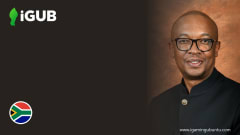
At the launch event, National Gambling Board (NGB) acting CEO Lungile Dukwana said online betting has made gambling easier to reach. He said safeguards must run through every stage, from opening an account and checking age to watching betting patterns and offering support. "Protection cannot rely solely on the information provided at the point of sale," he said. He cited the GeoPoll Betting in Africa 2026 report, which found that about 95% of active gamblers in major African markets, including South Africa, bet on mobile phones.
In a television news report of the launch, Dukwana said more students who get NSFAS (National Student Financial Aid Scheme) money, and more people on Sassa (South African Social Security Agency) grants, are using that money to gamble. He said this should worry everyone. Students are the country's future, he said, and grants are a safety net. He said the country needs norms and standards. No figures were given. We covered his warning in our report on SASSA and NSFAS money used for betting.
Gauteng economic development MEC Vuyiswa Ramokgopa welcomed the ad limits but said children must be protected. "The charter must complement the work of the regulator. It does not replace it," she said. She said Gauteng is reviewing its gambling law. She said she expects measurable results, backed by independent audits and public reporting.
What the R1.5 trillion figure measures
The television report said South Africa's betting industry produced about R1.5 trillion in turnover in the 2025 financial period. The NGB's own statistics for the year ending 31 March 2025 back the number, with one correction. R1.50 trillion is turnover for all gambling in the country, not betting alone. Betting made up R1.13 trillion of it, or 75%.
Turnover is not revenue. The NGB defines turnover as the money wagered. It counts "recycling", which means money staked more than once. For example, a player bets, wins and bets the winnings again. Gross gambling revenue (GGR) is what operators keep: turnover less winnings paid to players. The NGB puts GGR for the year at R74.5 billion. Betting earned about R52 billion of that. By our own arithmetic, GGR is about 5% of turnover, or about R5 for every R100 wagered. Gambling taxes and levies came to R5.8 billion.
Illegal operators and the tax debate
Bengtsson said: "We can improve our own standards, but we cannot protect people who gamble with unlicensed operators." He also warned that rules or taxes which make licensed operators less competitive than offshore sites "will push players towards platforms where they have no protection". A television news report of the launch said illegal operators are using digital platforms to reach players. It gave no figures. We reported earlier how Sun International pressed the minister on offshore sites.
National Treasury's discussion paper of November 2025 proposed a 20% national tax on online gambling GGR, on top of provincial taxes. Nothing is payable yet. Treasury says it will announce the final design in the February 2027 Budget, as we explained in our report on the delay.
What to watch in 2027
- Sun International says its AI-supported monitoring starts in 2027.
- The February 2027 Budget should show the design of the online gambling tax.
- Gauteng's review of its gambling law, which the MEC announced at the launch.
- The first audit and certification results. The charter's reporting will show whether it delivers. We found no dates for them.
Frequently asked questions
Is the Sun International charter a law?
No. It is a voluntary statement by the company. Its disclaimer says it creates no enforceable duty to players.
Is R1.5 trillion what South Africans lost to gambling?
No. It is the money wagered in the year to 31 March 2025, and it counts money staked more than once. What operators kept after paying winnings was R74.5 billion, according to the NGB.
Who is blocked from opening a Sunbet account?
The charter says Sunbet will refuse to activate an online account when a customer declares a Sassa grant or NSFAS funding as their income.
Information, not legal or financial advice. 18+ only. Gamble responsibly.