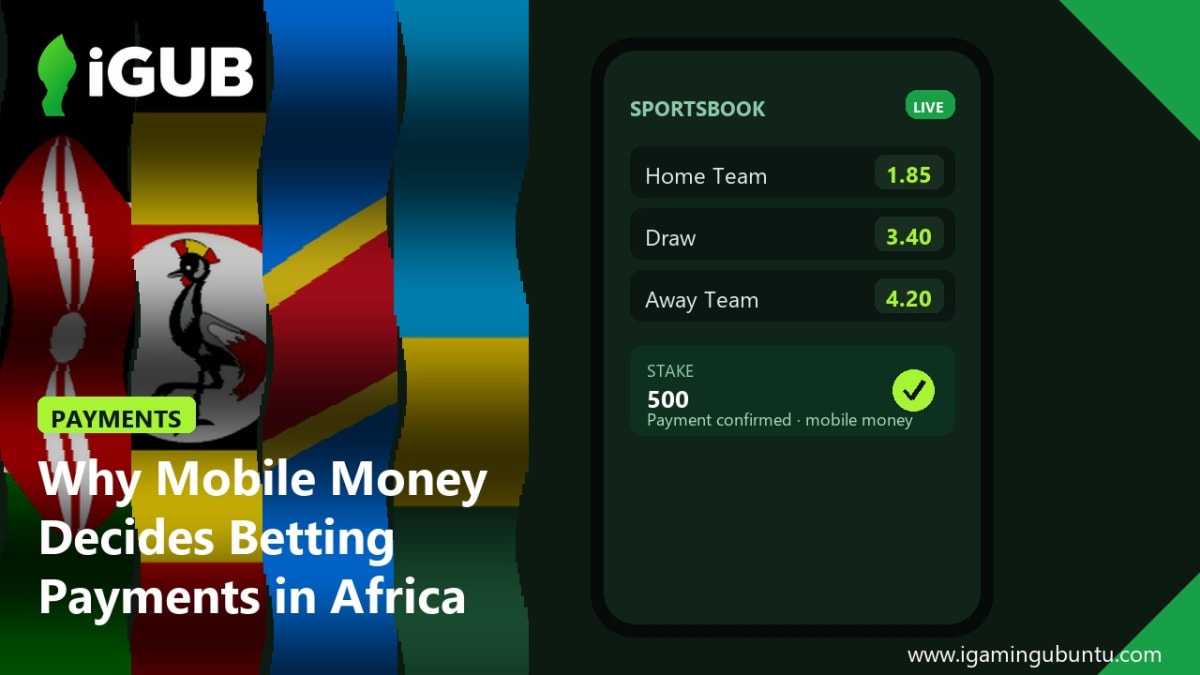

Mobile money is now how most players in East Africa fund their bets and collect winnings. At a recent payments panel, Juliet of Flexify and Felix Oteno of Centise explained why it works, where it still breaks down, and what needs to change. Lucy Manzi of Kotani Pay moderated.
The phone is where people bet, so it is where they pay too. Opening a wallet is quick, people use it daily, and they already trust it. In Kenya, M-Pesa is part of daily life, and almost everyone knows the STK push prompt. Tanzania and Uganda are close behind. Juliet said she cannot remember the last time she touched her own bank account: an operator cannot win in East Africa without mobile money. Nigeria is the exception, where bank transfer still leads. Felix put it in three words: convenience, access and trust, and both credited Kenya's regulator for making it easy to plug in.
East Africa has an edge Central Africa lacks, Felix said: networks talk to each other, so a Safaricom customer can pay an Airtel till with no friction, and a new wallet opens fast. In the Democratic Republic of Congo, people hold both US dollars and Congolese francs, so a single-currency set-up fails many players, see our report on e-money integration for DRC's gambling platforms. Juliet's rule: a payment method wins by following what people already do, not by changing them.
Deposits are mostly solved. Payouts are where trust is won or lost, a slick deposit means nothing if the withdrawal drags, and a late payout gets the network and the regulator a phone call, not just the operator. In Uganda and Tanzania, where several networks share the market, smart routing needs a backup path, since a careless reroute can pay a player twice. Juliet's advice: track approval rate, payout success rate, and how fast failed payments get fixed, the numbers we covered for operators measuring their own traffic. Felix said his firm has blacklisted operators whose withdrawals are a fight; the target is near-100% success both ways, and the best operators watch transactions live and say so instead of going quiet.
Compliance comes first, not last, Juliet said. A licence in Uganda does not cover Tanzania, and the mistake many operators make is building first and checking rules later, since a regulator can say no after the money is already spent. Fraud follows the same path: SIM-swap takeover and bonus abuse, where one wallet funds many accounts, are the tricks Flexify sees most, caught through phone numbers and emails. Felix agreed: regulators eventually catch operators who bluff their way in, and complying everywhere costs time but buys goodwill. Rwanda is piloting a fintech licence passportable into Ghana and Kenya under this year's Rwanda-Kenya deal, and Juliet pitched one COMESA-wide gaming licence, riding the rails PAPSS already runs for trade.
Player protection is a shared job: operators see gameplay, payment providers see the money, and together they catch what neither spots alone, through deposit limits, cooling-off periods and risk scores shared where the law allows, as Kenya's Data Protection Act does. Felix's warning: hundreds of deposits in a day is a red flag, and a player blocked by one provider just walks to another.
Both named interoperability, lower costs and better use of payment data as the next big wins. Juliet's closing line summed it up: trust is the product. Mobile money has won the deposit, compliance and real cooperation between operators, payment firms and regulators will decide whether it keeps winning.
This article is for information, not legal or financial advice. Gambling is for adults only (18+).