

Accurate as of 17 October 2026. Angola's gaming regulator says money laundering risk in the gaming sector got worse in 2025. Most of the operators it assessed were rated high or critical risk. Here is what the report found, what it means for operators, and what to fix first.
In short
- 17 gaming operators were assessed by the Instituto de Supervisão de Jogos (ISJ).
- 3 were rated critical risk, 9 high risk and 5 medium risk.
- High-risk operators rose from 4 to 9 compared with 2024, an increase of 125%.
- The biggest gap: most operators do not screen for politically exposed persons (PEPs), which the ISJ says the law requires.
- Angola has been on the FATF "grey list" since October 2024, so regulators are under pressure to show results.
What the regulator found
The findings come from the ISJ's 2025 sector report on money laundering risk in gaming, reported by Ecos e Factos on 13 October 2026. Operators were not named.
Of the 25 companies that operated during the year, 17 sent in their risk questionnaires and self-assessments. Three did not submit documents, and five were exempted because they had no documented activity.
The ISJ says casinos and betting platforms can be used to turn illegal money into money that looks legitimate. It singled out these weaknesses:
- No PEP screening. Most operators have no way to check customers against lists of politically exposed persons.
- Heavy cash use. Large amounts of cash, with manual controls.
- Splitting purchases. Players buying chips in smaller amounts across sessions to stay under the ID threshold.
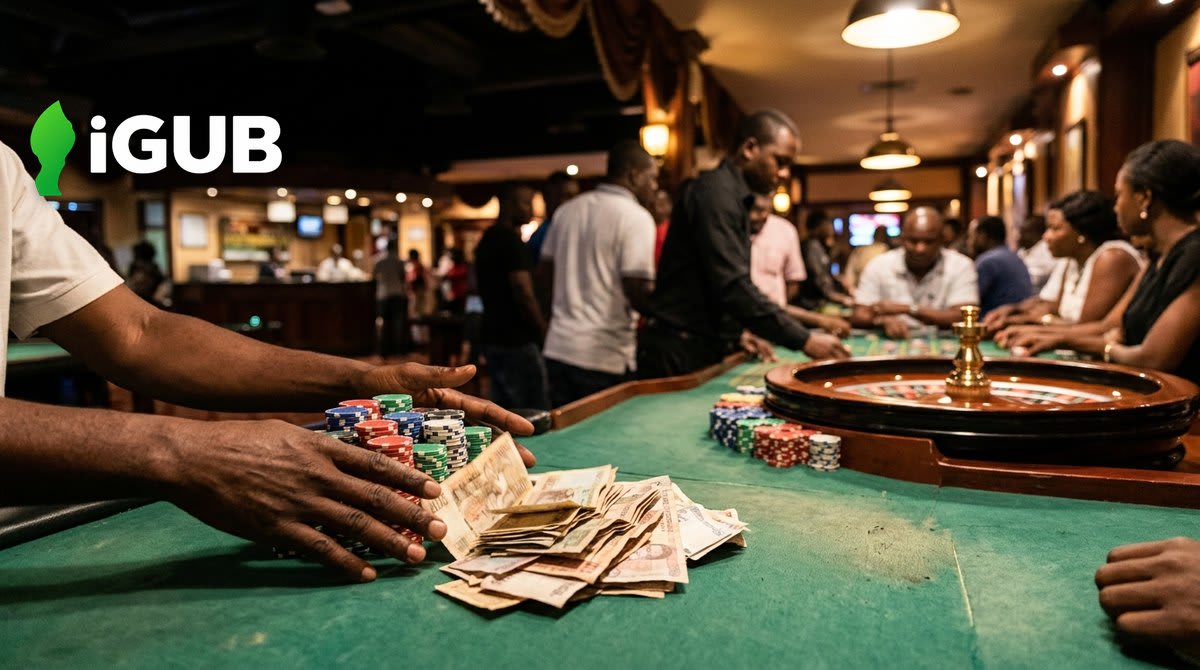
- Fast chip cash-outs. In one case, three players bought 15 million kwanza in chips and cashed them in within an hour, with no identification recorded.
- Weak online onboarding. Gaps in automated registration and identity checks.
- Outsourcing and offshore servers. Weak oversight of outsourced monitoring and of servers based outside Angola.
- Anonymous tickets. Physical tickets can be bought anonymously, and ID is only checked when a prize is collected.
- Poor paperwork. Contradictory questionnaire answers, and identification and due diligence applied inconsistently.
Reporting is rising
The gaming sector filed 246 suspicious transaction reports with Angola's Financial Information Unit (UIF) in 2025. Casinos filed 138 and online casinos 108. The ISJ credits training, a guide to suspicious transaction indicators published in December 2024, and joint workshops with the UIF on the goAML reporting system.
Under Angola's anti-money laundering law, as cited in the report, operators must report suspicious operations immediately. They must also report any player operation of USD 2,500 or more, or the equivalent in kwanza.
What it means for operators
1. Expect closer supervision
Nine high-risk and three critical-risk ratings out of 17 give the regulator a clear reason to inspect more. The ISJ already carries out on-site inspections; see our guide to what ISJ inspections mean for operators.
2. PEP screening is now the first thing to fix
The ISJ called for "urgent corrections", especially on PEP screening. An operator that cannot show a screening process is likely to be asked why.
3. Cash-heavy and online operators both face scrutiny
The report covers land-based casinos and online platforms. For land-based venues, the risks are cash, chip structuring and quick cash-outs. Online, the risks are onboarding, outsourced monitoring and servers abroad. Angolan players still rely heavily on cash, as we explained in our piece on cash and internet costs in Angola's betting market.
4. The grey list raises the stakes
Angola was placed under FATF increased monitoring in October 2024, and the FATF's June 2026 update still lists it. Its action plan includes showing a better understanding of money laundering risks and more investigations. Gaming is one of the few non-bank sectors that must report, so it is likely to stay in focus. FATF meets again in October; we found no published outcome for Angola when we checked.
Checklist: what to fix now
| Area | What to do |
|---|---|
| PEP screening | Screen every customer against PEP lists at sign-up and on large transactions, and keep a record of each check. |
| Cash and chips | Track chip purchases per player across sessions, and flag quick buy-and-cash-out patterns. |
| Identification | Identify customers before the reporting threshold is reached, not only when a prize is paid. |
| Online onboarding | Test your identity checks. Confirm who monitors transactions if this is outsourced, and where your servers are. |
| Source of funds | Ask where large deposits come from, refuse if they cannot be explained, and report. |
| Reporting | Report suspicious operations and player operations of USD 2,500 or more through goAML. |
| Self-assessment | Answer the ISJ questionnaire fully and consistently. Contradictions count against you. |
The legal basis
Angola's gaming law, Lei n.º 17/24 of 28 October 2024, requires operators to assess risk, identify customers, monitor transactions and report suspicious ones, according to a law firm summary. These duties sit alongside the national anti-money laundering law.
For a neighbouring market that is linking betting to e-money oversight, see our article on DRC gambling reform and e-money firms.
Related reading
Follow African iGaming as it happens
Daily regulation and market updates on Telegram
This article is for information, not legal advice. Sources last checked on 17 October 2026. Gambling is for adults only (18+).