 Industry News
How Brazil's Online Betting Restrictions Could Reshape the Global iGaming Industry
Brazil's online betting restrictions are creating uncertainty across the iGaming industry, affecting operators, affiliate marketers, sports sponsorships and players. Explore how these regulatory changes could reshape Brazil's betting market and influence the global iGaming landscape.
Brazil's online betting market has become a major part of the global iGaming industry, attracting international operators, affiliate marketers, technology providers and sports sponsorship partners. However, the country's regulatory landscape has entered a significant period of uncertainty following the government's decision to introduce restrictions on online betting.
On 25 September 2026, Brazil's government issued Provisional Measure No. 1,394, prohibiting the operation, offering, intermediation and advertising of fixed-odds betting, including online sports betting and online gaming. The measure is already in effect, with betting platforms scheduled to go offline from 6 October 2026. However, it requires approval by Congress within 120 days to remain in force permanently.
The development has raised important questions about the future of Brazil's iGaming market and its potential impact on the international gambling industry.
What Is Happening With Online Betting in Brazil?
Brazil previously established a legal framework for fixed-odds sports betting through legislation in 2018, with further legislation in 2023 covering online games. A licensing and regulatory system was subsequently introduced, allowing authorized operators to enter the market.
The latest provisional measure represents a major change to that framework. It prohibits betting operations and advertising, including activities by foreign companies targeting Brazilian consumers.
The government has also introduced a transition process for existing operators. New deposits have been prohibited, operators are required to facilitate the return of player balances, and betting websites and applications are scheduled to be taken offline from 6 October 2026.
Although the measure is currently in effect, its long-term status depends on the legislative process. This creates uncertainty for businesses that have invested in licensing, marketing, technology and partnerships in Brazil.
How Will Brazil's Betting Restrictions Affect the iGaming Industry?
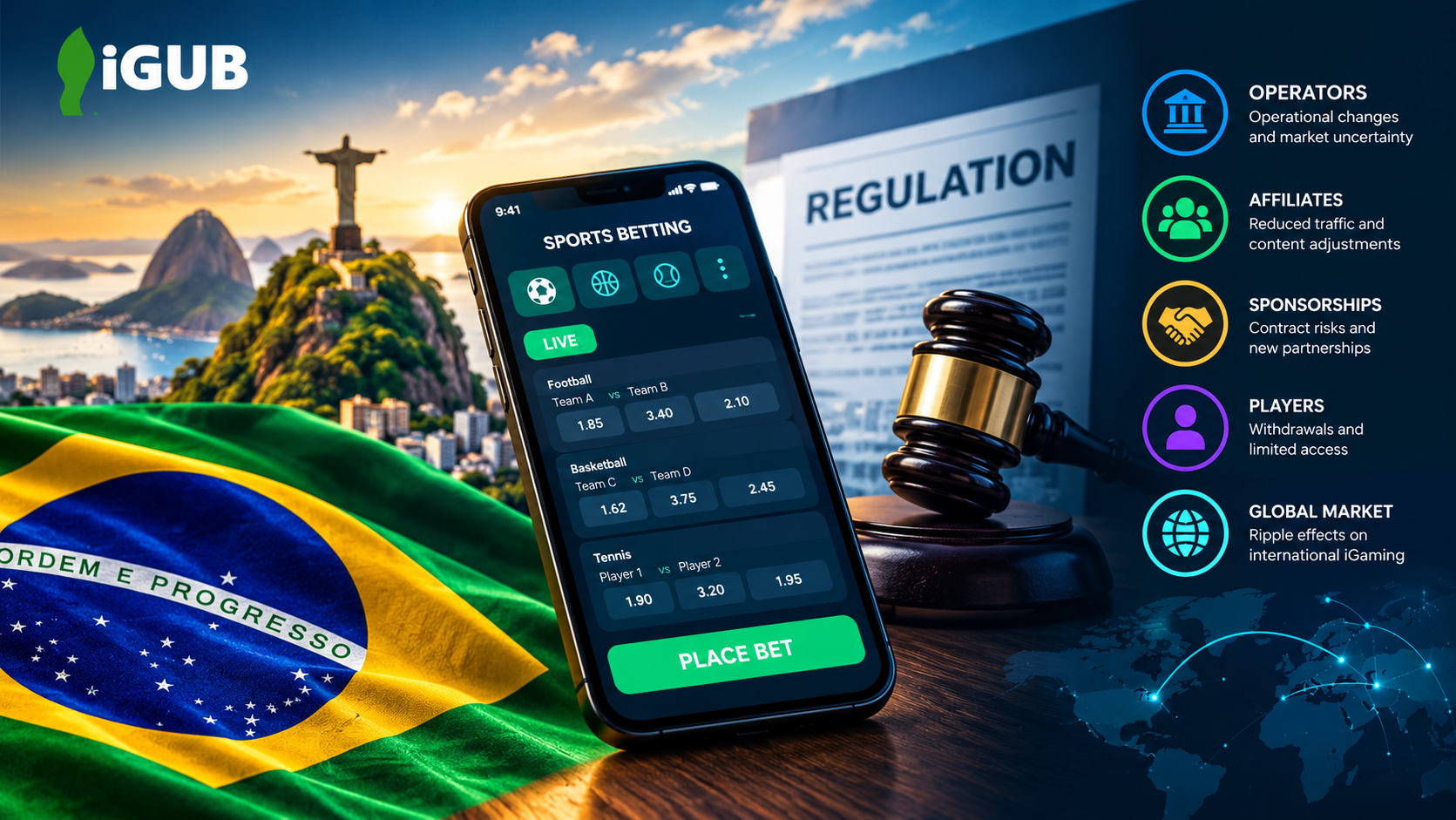
1. Impact on iGaming Operators
The restrictions create significant operational challenges for international and domestic betting operators with exposure to Brazil.
Companies that previously invested in the market may need to suspend operations, discontinue local marketing campaigns, review employment arrangements and reassess their financial commitments.
Operators with substantial Brazilian customer bases may also need to reconsider their geographical strategies and allocate resources to other markets where they are legally authorized to operate.
The extent of the financial impact will vary depending on each company's exposure to Brazil, its existing investments and the duration and final outcome of the restrictions.
2. Impact on iGaming Affiliate Marketing
Affiliate marketing is an important customer acquisition channel for many online betting operators. Affiliates generate traffic through SEO content, comparison websites, sports analysis, reviews and other forms of digital marketing.
Brazil's restrictions could affect affiliates that depend heavily on Brazilian betting-related traffic. Content focused on betting bonuses, bookmaker reviews, casino promotions and operator comparisons may lose its commercial relevance in the Brazilian market while the restrictions remain in force.
Affiliate businesses may need to review their existing content, remove or update promotional material and explore other legally accessible markets.
For publishers, this development also highlights the importance of diversifying traffic sources and avoiding overdependence on a single country's regulatory environment.
3. Impact on Sports Sponsorships
Sports sponsorships have played a significant role in the growth of Brazil's betting industry, particularly in football.
Betting companies have sponsored football clubs, competitions, stadiums and sporting events, helping operators increase brand visibility and reach large audiences.
The new restrictions prohibit betting advertising and sponsorship activities covered by the measure. This creates challenges for sports organizations that have relied on betting companies for commercial partnerships.
Clubs may need to renegotiate existing agreements, identify alternative sponsors and adjust their commercial strategies.
The financial implications will depend on the duration of the restrictions, the terms of existing contracts and the availability of replacement sponsorship opportunities.
4. Impact on Players and Consumers
The restrictions also have direct implications for Brazilian bettors.
Players have been given a transition period to withdraw their available balances from betting platforms. The government has also outlined procedures for returning remaining funds through financial institutions.
The restrictions are intended by the government to address concerns about gambling-related harm, household debt and consumer protection.
However, there are also concerns that prohibiting regulated betting platforms could lead some consumers to seek out unlicensed operators. Such platforms may not offer the same consumer safeguards, complaint procedures or financial protections as regulated services.
The long-term effects on consumer behavior will depend on enforcement, access to alternative entertainment and the future direction of Brazil's gambling policy.
5. Impact on the Global iGaming Market
Brazil's regulatory developments are relevant beyond its borders because the country has attracted considerable interest from international gambling operators and investors.
A major regulatory change in such a market can influence how businesses assess licensing risks, plan international expansion and allocate investment.
Operators may place greater emphasis on regulatory stability, compliance planning and market diversification when evaluating future opportunities.
Other jurisdictions may also monitor Brazil's approach as part of their own discussions about consumer protection, gambling-related harm, advertising and enforcement. However, Brazil's decision does not automatically mean that other countries will adopt similar restrictions.
Could Brazil's Restrictions Increase Unlicensed Gambling?
One of the important questions surrounding restrictions on regulated betting is whether some players will migrate to unlicensed platforms.
Unlicensed operators may attempt to attract consumers through alternative websites, social media channels, payment methods and offshore services.
This can make enforcement more complicated, particularly where operators are based outside the jurisdiction.
Brazil's government has indicated that it will strengthen enforcement against illegal betting activities, including website blocking and financial monitoring.
Whether these measures will significantly reduce unlicensed gambling will depend on the effectiveness of enforcement and the availability of accessible legal alternatives.
What Does This Mean for the Future of iGaming Regulation?
Brazil's regulatory shift highlights the importance of regulatory developments in shaping the online gambling industry.
For operators, compliance is not limited to obtaining a licence. It also involves monitoring legislative changes, understanding advertising requirements, protecting customers and preparing for changes in market access.
For affiliates and publishers, it is important to ensure that content and promotional activity comply with the applicable laws in the locations they target.
For investors and technology providers, regulatory uncertainty can affect business planning, partnership agreements and long-term investment decisions.
The outcome of Brazil's legislative process will be an important factor in determining the future structure of its betting market.
How Can iGaming Businesses Respond?
Businesses with exposure to Brazil can consider several practical steps:
Review regulatory obligations: Monitor official government announcements and the progress of the provisional measure through Congress. Assess market exposure: Identify the proportion of revenue, traffic and commercial partnerships associated with Brazil. Review affiliate content: Update content and advertising materials to ensure they comply with applicable restrictions. Diversify operations: Assess opportunities in other markets where the business is appropriately licensed and authorized. Reassess partnerships: Review sponsorship, affiliate and technology agreements in light of the regulatory changes. Strengthen compliance: Establish processes for tracking regulatory developments and responding to changes in market access.
These measures can help businesses manage uncertainty without assuming that the current restrictions will necessarily become permanent.
Conclusion
Brazil's online betting restrictions represent a significant regulatory development for the iGaming industry. The measure affects betting operators, affiliate marketers, sports organizations, technology providers and consumers, while raising questions about the future of one of the industry's important markets.
The immediate effects include operational disruption, changes to marketing activities, uncertainty around sponsorship agreements and the need for businesses to reassess their exposure to Brazil.
The longer-term consequences will depend on the legislative process, enforcement measures and how the market evolves.
For the wider iGaming industry, Brazil's experience highlights the importance of regulatory awareness, responsible business planning, market diversification and consumer protection in an increasingly complex global gambling environment.
Frequently Asked Questions
1. Is online betting banned in Brazil? Brazil's Provisional Measure No. 1,394, issued on 25 September 2026, prohibits fixed-odds betting and related activities. The measure is in effect, but it requires congressional approval within 120 days to remain in force permanently.
2. When will betting websites be taken offline in Brazil? Under the government's announced timetable, betting websites and applications are scheduled to be taken offline from 6 October 2026.
3. How will Brazil's betting restrictions affect iGaming affiliates? Affiliates that rely on Brazilian betting-related traffic may experience reduced commercial opportunities, restrictions on promotional content and the need to reassess their market strategies.
4. Will Brazil's restrictions affect international betting companies? Yes. International companies that serve Brazilian customers may need to suspend their local operations, review their investments and reassess their exposure to the market.
5.Could the restrictions lead to an increase in unlicensed gambling? There are concerns that some consumers could move to unlicensed platforms. However, the scale of any such shift remains uncertain and will depend on enforcement and consumer behavior.
6. Will Brazil reopen its online betting market? The future of the market is uncertain. The provisional measure must go through the legislative process, and any subsequent changes to the legal framework will depend on decisions by the relevant Brazilian authorities.
Also read:SBC Summit 2026 Opens in Lisbon with Focus on Global iGaming Trends
Advertisement
Best Odds & Betting Offers
AdsSportPesa
200% Welcome Bonus up to KES 5,000, M-Pesa Accepted
18+ · T&Cs apply · Affiliate link
1xBet
100% Deposit Bonus + $100 Free Bet + Live Streaming
18+ · T&Cs apply · Affiliate link
Betika
Free Bet on First Deposit + Instant M-Pesa Withdrawals
18+ · T&Cs apply · Affiliate link
18+ Only. Gamble responsibly. Affiliate links — we may earn a commission.
Advertisement
SportPesa
200% Welcome Bonus up to KES 5,000, M-Pesa Accepted
18+ · T&Cs apply · Affiliate
Top Betting Sites
AdsSportPesa
200% Welcome Bonus up to KES 5,000, M-Pesa Accepted
18+ · T&Cs apply · Affiliate link
1xBet
100% Deposit Bonus + $100 Free Bet + Live Streaming
18+ · T&Cs apply · Affiliate link
Betika
Free Bet on First Deposit + Instant M-Pesa Withdrawals
18+ · T&Cs apply · Affiliate link
18+ Only. Gamble responsibly. Affiliate links — we may earn a commission.
Kitty Lilly
iGaming content specialist covering African markets
Published Oct 3, 2026 · Updated Oct 3, 2026
This article contains affiliate links. We may earn a commission when you sign up through our links at no extra cost to you. All opinions, reviews, and recommendations are our own based on independent research and expertise. Please gamble responsibly. 18+.